
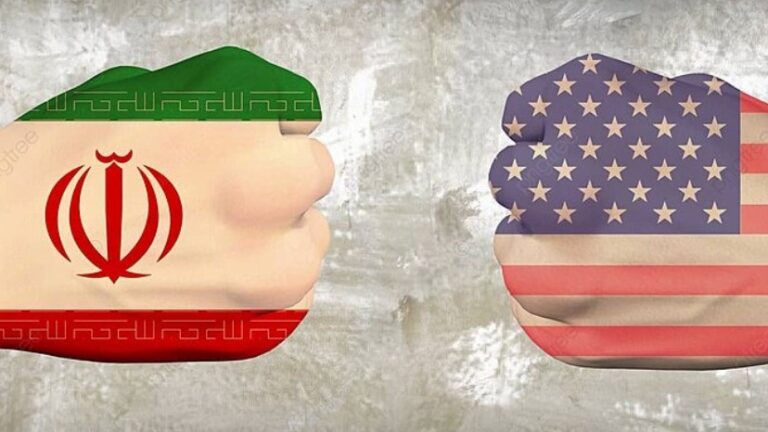
After more than a year of stepping way from writing, I felt like writing again. The reason is the current situation unfolding in Middle East. As someone who closely follows geopolitics, I would like to share a few ‘unbiased’ thoughts on the current situation. This will be a two-part blog 🙂 .
For years, tensions between the United States and Iran have shaped the political framework of the Middle East. The rivalry cannot be considered as a normal dispute, it is a struggle over security, energy, regional influence, and ideological legitimacy.
To understand why confrontation persists, we must look at four strategic pillars that drive U.S. policy and the revolutionary identity that drives Iran. In this article I am concentrating more on U.S. – Iran conflict.
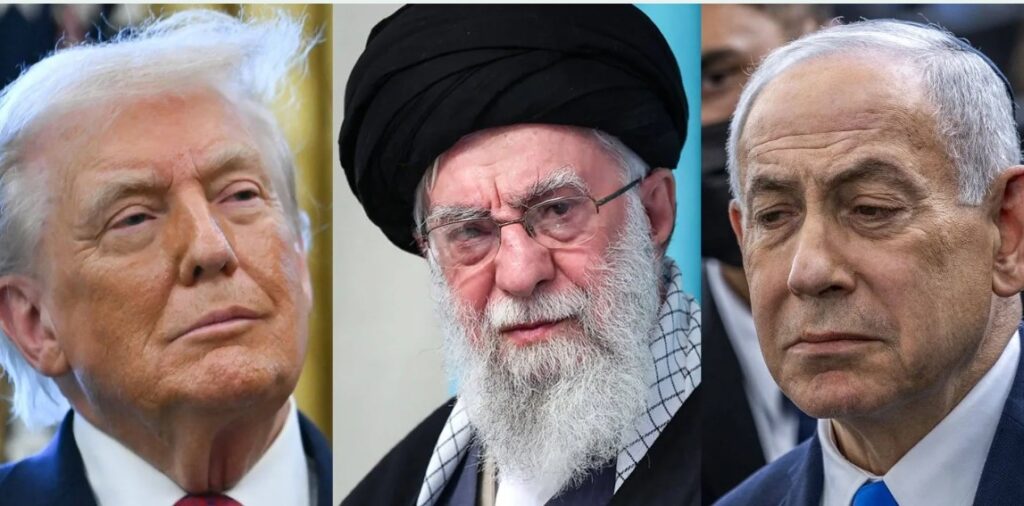
America’s Strategic Interests in the Middle East
1. Protection of Israel
One of America’s core regional objectives has long been ensuring the security of Israel. After the 1979 Islamic Revolution, Iran became openly hostile toward Israel, rejecting its legitimacy and supporting armed groups committed to confronting it (We all know the story). Over time, several traditional state-level adversaries of Israel were neutralized:
- The 2003 U.S. invasion of Iraq removed Saddam Hussein from power.
- The 2011 civil war led to the fall of Muammar Gaddafi in Libya.
- Syria’s internal conflict and the collapse of Bashar al-Assad’s rule ended their role as a subsequent military threat.
In current scenario, Iran remains Israel’s major state-level adversary. Tehran has built the “Axis of Resistance” – a network of non-state allies designed to stop both Israeli as well as American influence:
Hezbollah (Lebanon), Hamas (Gaza), Palestinian Islamic Jihad, Houthi movement (Yemen) & Various Shia militias in Iraq and Syria
From Washington’s perspective, containing Iran is the major step that ensures protecting Israel’s long-term national security.
2. Energy and Natural Resources
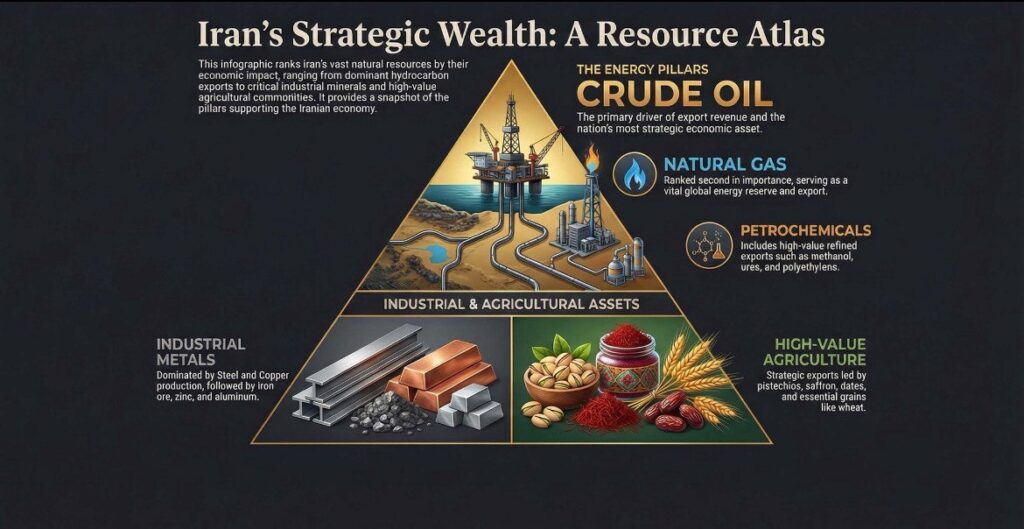
Iran cling to around 9–10% of the world’s oil reserves and ranks among the top holders of natural gas, second only to Russia. Control over such a huge oil resources gives Tehran geopolitical advantage, especially in a region that supplies a vast share of global energy demand.
Apart from oil resources, Iran holds major reserves of copper, iron ore, zinc, and uranium, making it one of the most resource-rich states in Middle East.
3. The Strait of Hormuz: Geography as Power
Iran’s key position is amplified by their geography.
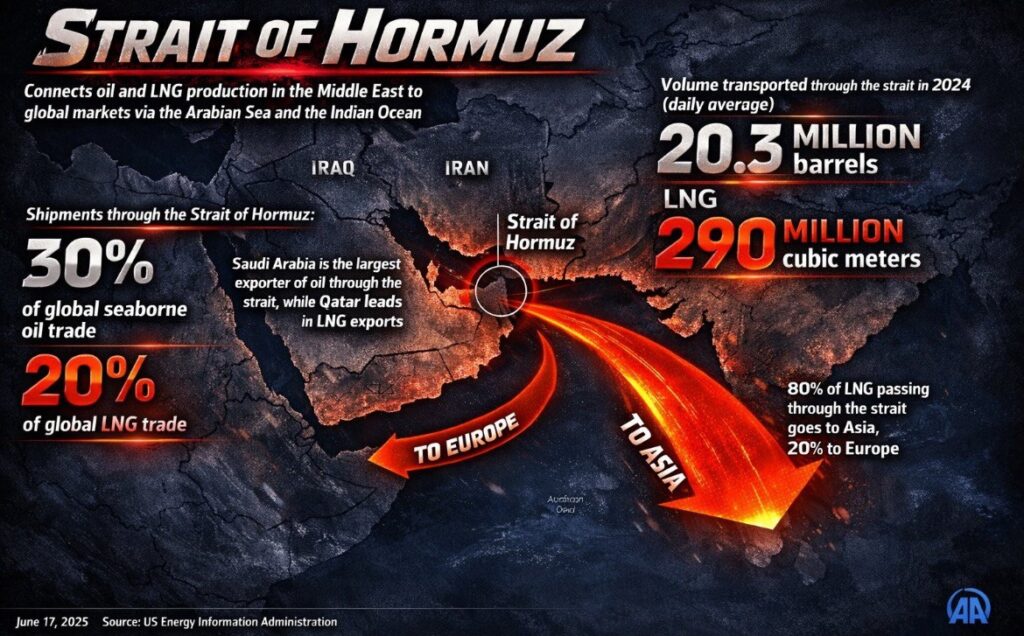
It operates the northern coastline of the Strait of Hormuz, the small maritime corridor connecting the Persian Gulf to the Arabian Sea. Around one fifth of world’s seaborne oil trade passes through this chokepoint. That means any conflict in Iran can trigger immediate spikes in global energy prices and ripple effects across world markets. This makes Iran one of the most strategically important states in the region.
4. Regional Stability and Gulf Alliances
Most of the Arab countries openly calls for de-escalation with Iran but secretly consider Iran as a major threat.
Countries like Saudi Arabia, United Arab Emirates & Bahrain host U.S. military bases and rely heavily on American security guarantees. For U.S., maintaining regional stability means:
Protecting allies, Preventing Iranian regional dominance & Securing energy flows. The confrontation is therefore about balance of power, not simply ideology.
Why Iran Took a Different Path?
Before 1979, Iran was under Mohammad Reza Pahlavi’s rule and was one of America’s closest regional allies as well as maintained quiet ties with Israel. Everything changed after the Islamic Revolution led by Ayatollah Ali Khamenei. The new administration were built on three foundations:
- Opposition to Western domination
- Rejection of Israel’s legitimacy
- Governance based on Shia Islamic political theology
Hostility toward the United States and Israel became part of the state’s ideological foundation, not just foreign policy.
The Religious and Political Divide
Iran is a Shia-majority nation in the region, the largest!. Most Arab states are Sunni-majority.
The Sunni–Shia split started in 632 CE after the death of their Prophet Muhammad, originally a political dispute over leadership succession. Over centuries, it transformed into theological discrepancy.
Today, around 85–90% of Muslims population globally are Sunni and 10–15% are Shia. Iran is overwhelmingly Shia But theology alone does not explain geopolitics. After 1979, Khomeini introduced the doctrine of Velayat-e Faqih (Guardianship of the Islamic Jurist). The concept was simple: Since the Twelfth Imam is absent, a senior Islamic jurist must govern.
This created a supreme Leader, clerical oversight of elected institutions, a state explicitly rooted in Shia jurisprudence. No Sunni-majority state has a comparable system of clerical supremacy. Iran’s political model is therefore unique and ideologically assertive.
Iran sees itself as the Protector of Shia communities and Leader of “resistance” movements, but Sunni monarchies, particularly Saudi Arabia, view this as a threat to regional balance and a risk of internal unrest.
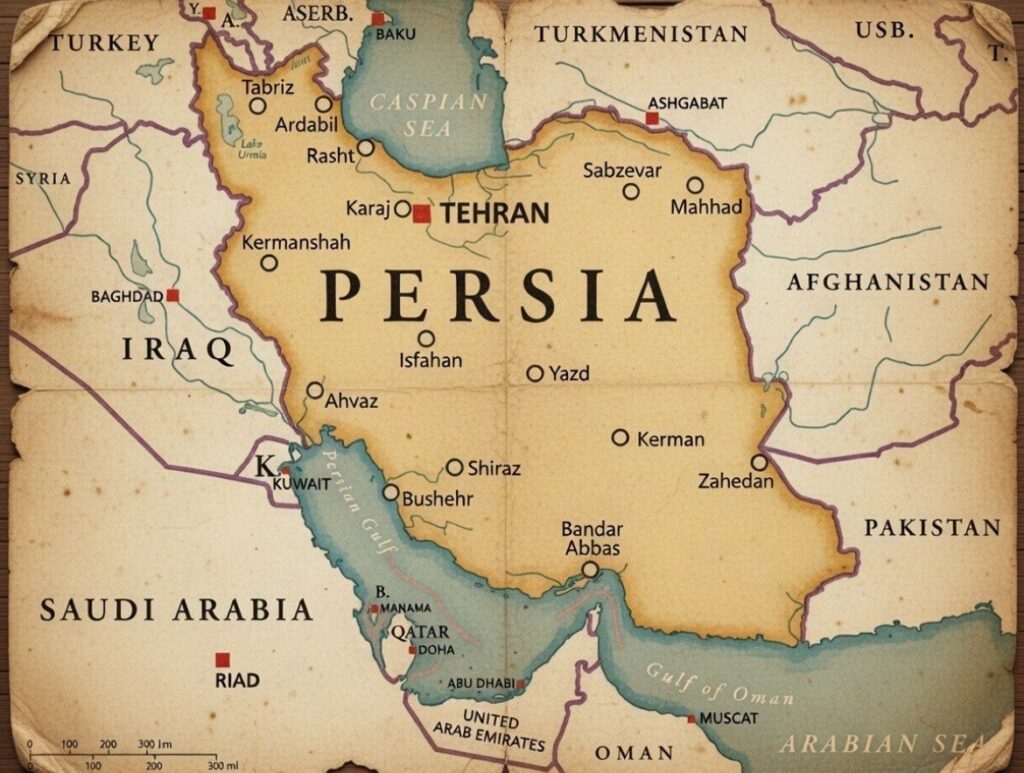
Persian Identity vs. Arab Order
Iran is Persian (non-Arab), Farsi-speaking and Heir to an imperial tradition older than Islam. But their most neighbouring states are Arab. Ethnicity, language, and historical incidents widen the split.
Why Most Muslim States Align with America?
This has less to do with ideology and more about survival. Jordan depends heavily on U.S. aid. Egypt aligned with U.S. after the Camp David Accords. Saudi Arabia preserves an oil-for-security partnership with the U.S. These administrations give importance to Regime stability, Economic security and Military protection whereas Iran announce themselves as an identity of resistance.
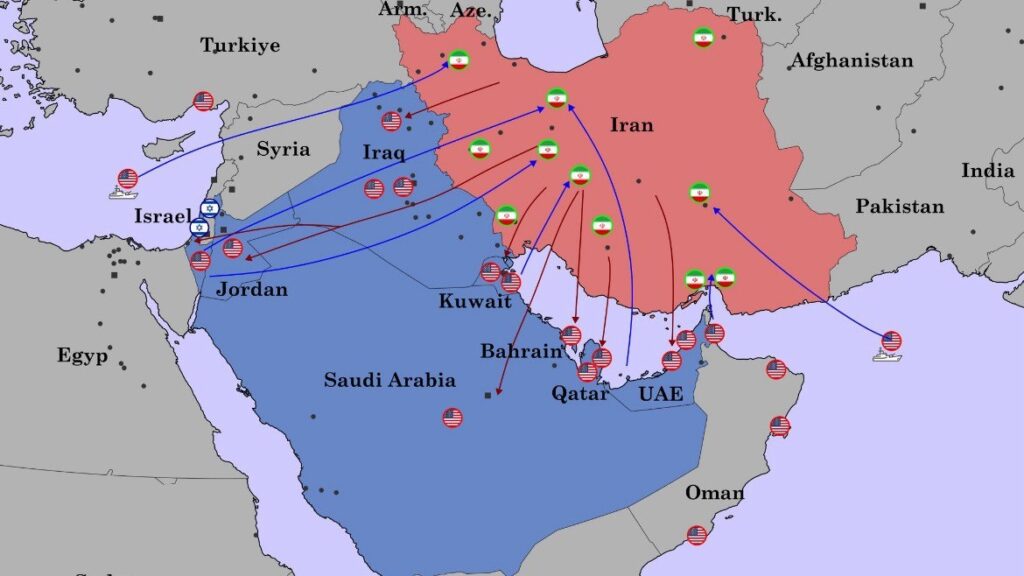
Middle East: Impact and Reactions in 2026
The Iranian attacks on U.S. military bases in the Middle East, including potential hits near Dubai, Riyadh, Bahrain, and Oman port have significantly shifted the regional landscape. These strikes directly endangers civilians, infrastructure, as well as oil facilities, creating both a humanitarian crisis and a strategic dilemma for regional governments. Gulf States, which host U.S. troops and rely on American security guarantees, now face the challenge of protecting citizens as well as avoiding full-scale war with Iran.
Immediate Impacts
- These missile and drone strikes is threatening civilian safety. This will affect their day to day life.
- Oil production as well as transportation through the Strait of Hormuz encounter immediate risks. This will skyrocket the global energy prices.
- Political Pressure will be so high, that other Arab nations have to come up and choose sides or release a statement on where they stand in this scenario.
Potential Reactions
- Saudi Arabia and UAE might be leaning towards increasing their internal defence readiness and they might coordinate closely with the America.
- Since Bahrain and Oman re comparatively small states, they may take defensive stand, limiting escalation. U.S. have bases in Bahrain and Oman that are now potential Iranian targets.
- Qatar may continue their mediator role, using diplomacy to de-escalate tensions while keeping U.S. and Iranian channels open.
- Israel will continue doing what they were doing so far, with, may be more intensity.
- Iraq & Lebanon are most vulnerable to escalation, with civilian populations bearing the brunt of retaliatory attacks.
To conclude, these attacks force Middle Eastern governments into a tightrope walk: they must consider the safety of their citizens and economic assets, maintain alliances, and address this escalating tensions without allowing a full Middle East war. How they respond, whether by supporting U.S. military actions, seeking immediate diplomatic resolution, or hedging strategically will shape the short as well as long term stability of the Middle East and the global oil.
That is the first part of this blog. We have discussed major events that occurred so far. But you shouldn’t take everything at face value, there is always more beneath the surface. In January 2026 U.S captured the president of Venezuela, Now in February 2026, the U.S. and Israel launched attacks, killing Iran’s supreme leader. Do they connect to something much larger?
